

















In urban areas, vape and tobacco shops flood communities. They target minorities and the youth who are experiencing poverty, harsh daily life, or stress. Tobacco and vaping shop products serve as relief, escape, and, for some, entertainment.
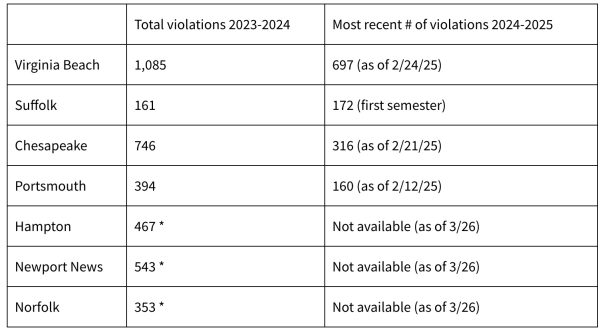
Vaping violations in the 757 regions in 2023-2024 ranged from 300 to 1,085 per district. The numbers started relatively high and mostly decreased within the following year. Virginia Beach led with the highest number of vaping violations, at 1,085, and saw a drastic drop to 697 as of last year. Although we are seeing a decrease in the number of vaping violations, the problem remains widespread.
Students indulge in vaping and struggle to quit vaping despite the support to stop and the consequences. Here at Bethel High School, we have restorative counseling that helps with vaping issues long-term and steeper disciplinary action if needed. However, this is not the case for all schools.
According to a USC study, among youth who vape, “Over the study period, the demographics of youth vapers also changed. By 2024, more vapers were female, non-Hispanic Black, or from a rural area. More youth vapers also reported using other substances, including alcohol and cannabis.“
In urban areas, we see an influx of vape and tobacco shops with targeted marketing. They market colorful vapes and tobacco products that promise relief and fun.
American Lung Association reports, “Almost 90% of middle and high school students who vape reported using flavored e-cigarettes, with the top four flavors being fruit, candy/dessert/other sweets, mint, and menthol.”

The marketing is enticing flavors and colorful, designed products. Now, think about these products concentrated in minority areas. E-cigarettes and tobacco products are more accessible and highly available in urban areas.
Results from a Vape shop density and socio-demographic disparities: A U.S Census tract analysis states, “Overall, there was a higher vape shop density in urban versus nonurban census tracts…higher vape shop density was associated with larger proportions of African Americans and Hispanics, smaller household size and a lower percentage of owner-occupied housing units.”
This pattern isn’t accidental; it reflects a system that values profit over the health of vulnerable communities, feeds off of minorities, and the youth.
As a community, it’s our responsibility to advocate for a change. Real change involves parents, schools, and local leaders. It’s time to hold these systems accountable to ensure the future of our youth and communities.